
Healthcare Professionals as a “High-Risk Group” for Varicose Veins: Global Prevalence Reaches 25%

Reference: He, Q. F., Cai, J. Y., Cheng, M., et al. (2025). Global prevalence and risk factors of varicose veins among healthcare workers: a systematic review and meta-analysis. BMC Nursing. PMID: 40380325; PMCID: PMC12082987.
A recent meta-analysis published in BMC Nursing, an authoritative international journal, provides a sobering global perspective on the occupational health of medical staff. Authored by Qi Fan He and a team of Chinese scholars from key medical and Traditional Chinese Medicine universities, the study systematically examines the health challenges faced by healthcare workers (HCWs) within current medical management systems.
The research team conducted an exhaustive search of four core databases—Embase, PubMed, Web of Science, and CINAHL—to select high-quality primary studies. A random-effects model was employed to calculate the weighted global prevalence, aiming to balance heterogeneity across different regions and clinical environments to arrive at a representative “global mean.”
An Underestimated Reality
The findings reveal that the pooled global prevalence of varicose veins (VVs) among healthcare workers is 25% (95% CI, 18–31%). This indicates that, globally, one in every four healthcare professionals suffers from lower limb venous hypertension.
1. The Regional Paradox: Developing Nations as “Hotspots”
Subgroup analysis highlights a concerning trend: HCWs in the Middle East, North Africa, and other developing regions face a prevalence as high as 28%–29%, whereas data from developed countries remains relatively moderate (approximately 20%).
This disparity is not merely physiological but reflects deep-seated imbalances in global medical resource allocation. In many developing nations across Asia and Africa, a lower nurse-to-patient ratio forces staff to endure longer periods of continuous standing with fewer opportunities for intermittent rest.
2. The Diagnostic Debate: Methodology Defines “Truth”
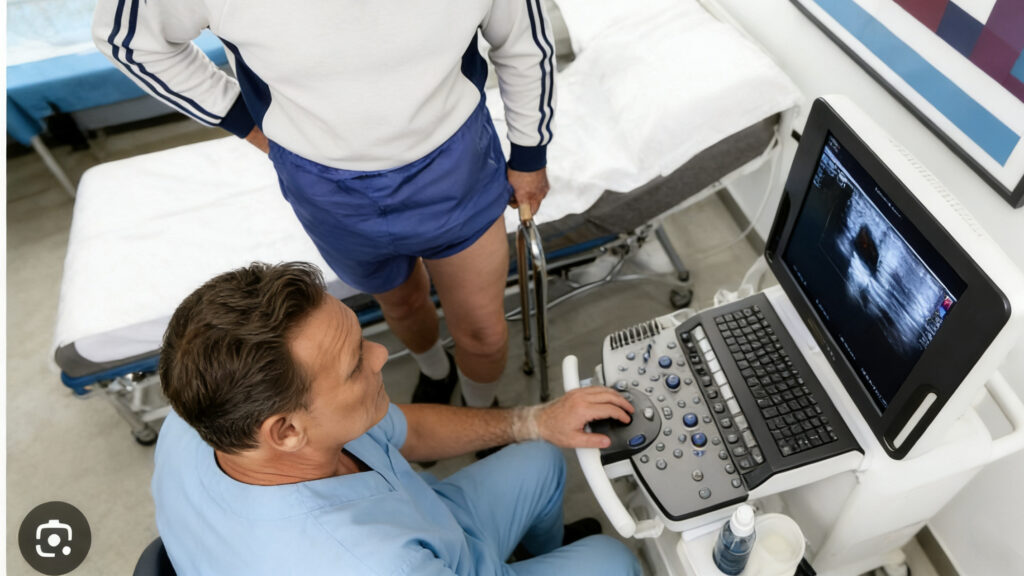
The study found that research utilizing a comprehensive diagnostic approach—combining Color Doppler Ultrasound (DUS), CEAP Clinical Classification, and structured questionnaires—reported a significantly higher prevalence (28%) than studies relying solely on self-reported questionnaires or visual inspection.
This suggests a “survivor bias” in previous epidemiological surveys. Many early-stage patients (CEAP C1: telangiectasia or reticular veins) were excluded due to a lack of subjective symptoms. From a phlebological perspective, the value of early intervention far exceeds late-stage surgery; thus, diagnostic bias leads to a missed window for effective prevention.
Risk Factors Beyond “Prolonged Standing”
The article quantifies three core risk factors, confirming clinical intuition while offering new insights:
-
Gender (OR = 3.29): Female HCWs face over triple the risk of their male counterparts. This is attributed not only to lower smooth muscle content in female venous walls but also to the impact of estrogen on valvular function.
-
Family History (OR = 1.86): Genetic predisposition determines the innate structural integrity and tensile strength of the venous wall collagen fibers.
-
Parity (OR = 1.75): The risk increases significantly in multiparous women, a dual consequence of increased intra-abdominal pressure and hormonal fluctuations during pregnancy.
Scientific Critique and Potential Data Variance
While the meta-analysis offers robust data, several limitations must be acknowledged:
-
Heterogeneity Challenges: The included studies span different decades and countries with varying diagnostic criteria, which may introduce measurement errors in the pooled data.
-
Participation Bias: HCWs with existing symptoms (e.g., leg heaviness or aching) are more likely to participate in such studies, potentially resulting in a prevalence slightly higher than that of the general natural population.
-
Departmental Variables: The study lacks a granular subgroup breakdown by department (e.g., Operating Room, ER, ICU, Ward, Administration), despite the vastly different levels of occupational exposure in these settings.
Challenging Common Wisdom: Counter-intuitive Findings
One of the most provocative findings is that “high medical knowledge” does not translate into “low prevalence.” One might assume HCWs would be the most adept at prevention, yet the reality shows:
-
Knowledge-Behavior Gap: Many nurses are aware of the benefits of Graduated Compression Stockings (GCS), but compliance is low due to discomfort in hot climates, the complexity of donning the garments, and strict hospital uniform codes.
-
Systemic Dominance over Individual Agency: Individual preventive intent is often overruled by the necessity of “fixed-position standing” during long surgeries. This shifts the focus from individual negligence to the necessity of improved hospital management.
Conclusion and Outlook: A Roadmap for the Asian Phlebology Community
This study serves as a “White Paper on Occupational Safety” for medical institutions. The venous health of HCWs should not be treated as a private matter but integrated into the institutional occupational health system. The Asian Venous Academy (AVA) suggests:
-
Institutionalized Compression Therapy: Hospitals should provide professional-grade GCS to high-risk departments (OR, ICU), similar to masks and PPE.
-
Routine Screening: Lower limb venous Color Doppler Ultrasound should be a mandatory component of annual health check-ups for medical staff.
-
Management Innovation: Implementing flexible scheduling and mandatory “venous return breaks” (e.g., 15–20 minutes of leg elevation) after four hours of continuous standing.
“Physician, heal thyself” remains a difficult challenge. This global meta-analysis exposes the vulnerability of those on the front lines. Only through a combination of scientific intervention and institutional care can we ensure that those who care for others can continue to stand strong.
We welcome inquiries regarding academic collaboration, joint scientific meetings, educational initiatives, and appropriate institutional support aligned with the Academy’s mission.