


Paradigm Shift in Venous Ulcer Management:The Critical Role of Great Saphenous Vein
Introduction
In clinical practice, the ablation of the Great Saphenous Vein (GSV) is often considered the gold standard for treating chronic venous insufficiency. However, recent research published by Bishara et al. (2024) provides a crucial “stop sign” for surgeons treating patients with Post-Thrombotic Syndrome (PTS) and active venous leg ulcers (CEAP C6).
The Core Conflict: Reflux vs. Obstruction
The study highlights a critical physiological distinction:
- In Primary Reflux: The GSV is a liability, contributing to venous hypertension.
- In PTS with Deep Obstruction: The GSV is an asset. It acts as a vital collateral bypass (an “escape valve”) for blood to return to the heart when the deep veins are blocked.
Key Findings from PMC11523357
The retrospective study analyzed the outcomes of 48 limbs and found significant disparities based on whether the GSV was preserved:
| Outcome Metric | Intact GSV Group | Ablated/Stripped GSV Group |
| Healing Probability | Significantly Higher | Lower |
| Healing Time | Faster Trajectory | Delayed / Stalled |
| Recurrence Rate | Reduced | Significantly Increased |
Clinical Implications
The physiological mechanism is clear: removing the GSV in the presence of deep venous obstruction elevates regional venous pressure ($P_v$), which exacerbates microcirculatory dysfunction and prevents ulcer healing.
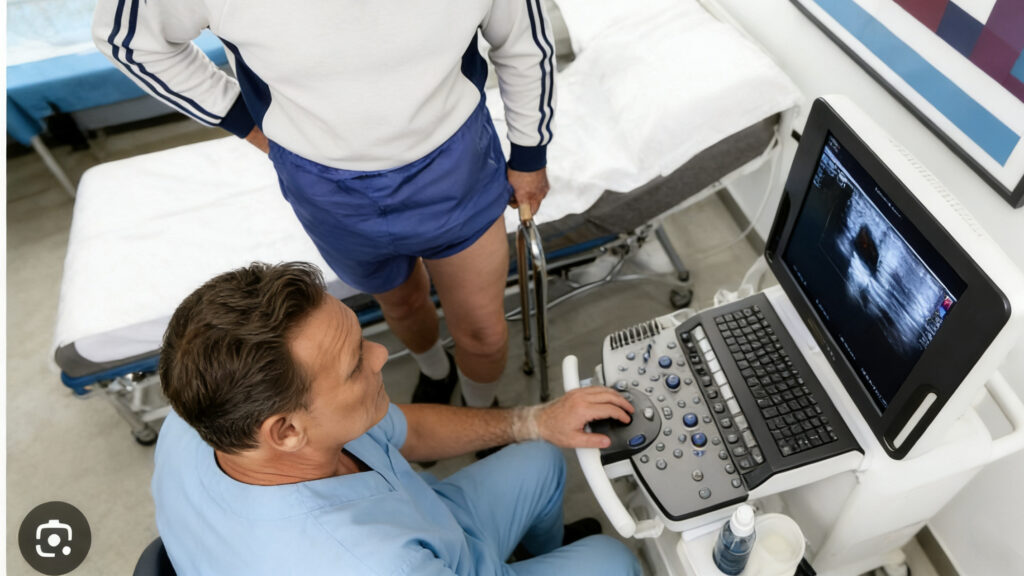
Recommendation: A rigorous assessment of deep vein patency via Duplex ultrasound or venography is mandatory before any superficial ablation. In PTS patients, the GSV may be the limb’s only effective drainage route.
Conclusion
This research serves as a reminder that “one size does not fit all” in vascular surgery. Preservation, rather than elimination, of the saphenous system can be the key to successful ulcer management in complex PTS cases.
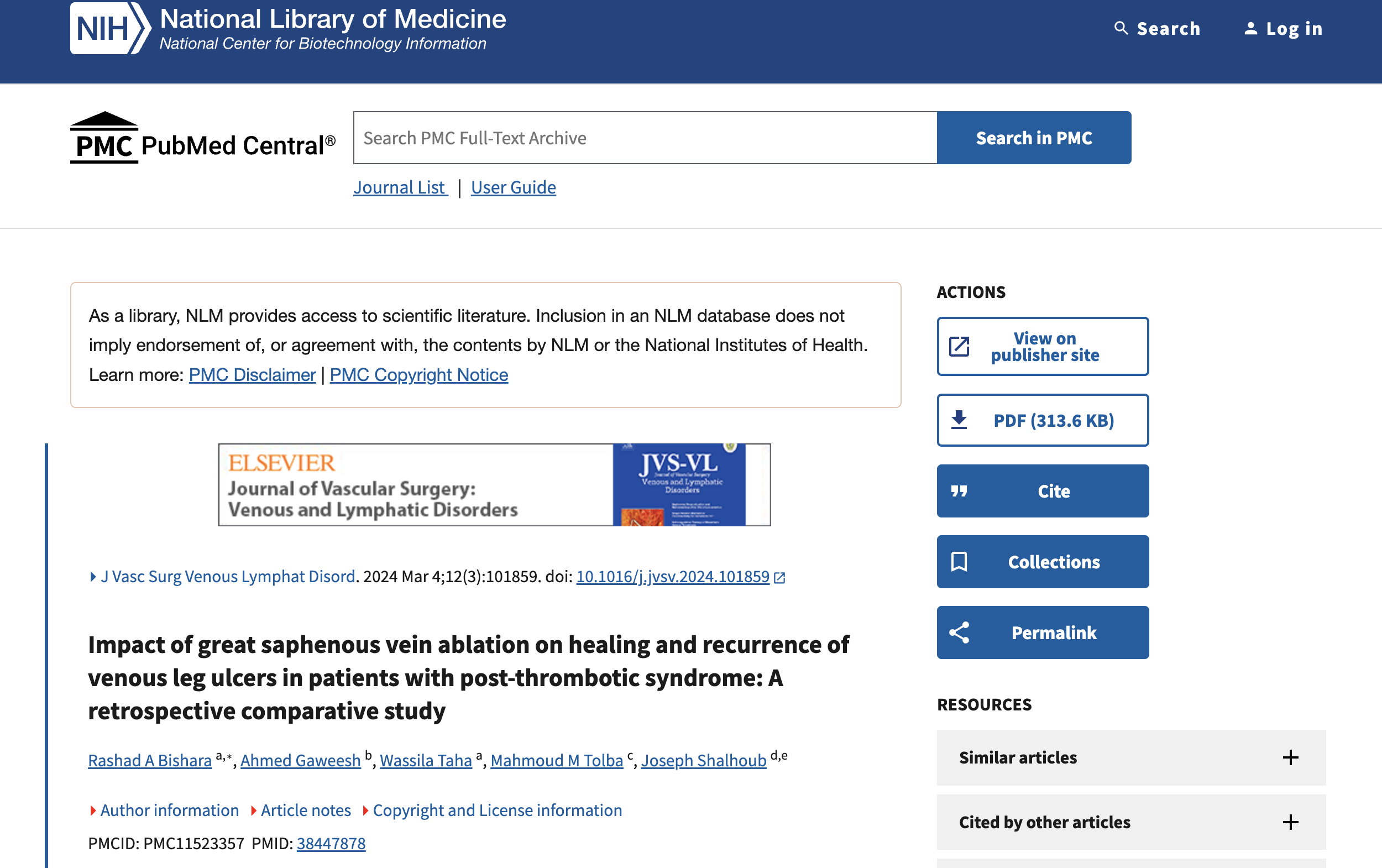
Original Article Link: https://pmc.ncbi.nlm.nih.gov/articles/PMC11523357/
Full Citation:
Bishara RA, Gaweesh A, Taha W, et al. Impact of great saphenous vein ablation on healing and recurrence of venous leg ulcers in patients with post-thrombotic syndrome: A retrospective comparative study. JVS Cases, Innovations and Techniques. 2024.
We welcome inquiries regarding academic collaboration, joint scientific meetings, educational initiatives, and appropriate institutional support aligned with the Academy’s mission.